 文献检索
文献检索

 PDF
PDF
 下载PDF
下载PDF
[1] Bhullar P S, Joshi M, Chugh R. ChatGPT in higher education: A synthesis of the literature and a future research agenda[J]. Education and Information Technologies, 2024, 29: 21501-21522. DOI:10.1007/s10639-024-12723-x.
[2] 吴亚婕, 姜姗姗. 学生学习过程、批判性思维与学业成就的关系研究[J]. 电化教育研究, 2015, 36(12): 90-97.
[3] 秦西玲, 吕林海. 拔尖学生的学习参与及其批判性思维发展:基于全国12所“拔尖计划”高校的实证研究[J]. 江苏高教, 2022(1): 73-82.
[4] 沈红, 宋亚萍. 我国本科教育对学生批判性思维能力的塑造机制[J]. 高等教育研究, 2025(3).
[5] 王新凤, 韩子祥. 拔尖学生批判性思维对创造力的影响机制探析[J]. 河北师范大学学报(教育科学版), 2026(3).
[6] 戚佳, 徐艳茹, 刘继安, 等. 生成式人工智能工具使用对高校学生批判性思维与自主学习能力的影响[J]. 电化教育研究, 2024, 45(12): 67-74. DOI:10.13811/j.cnki.eer.2024.12.009.
[7] Suriano R, Plebe A, Baccellina D, et al. Student interaction with ChatGPT can promote complex critical thinking skills[J]. Learning and Instruction, 2025, 95: 102011. DOI:10.1016/j.learninstruc.2024.102011.
[8] Stadler M, Bannert M, Sailer M. Cognitive ease at a cost: LLMs reduce mental effort but compromise depth in student scientific inquiry[J]. Computers in Human Behavior, 2024, 160: 108386. DOI:10.1016/j.chb.2024.108386.
[9] Liang W. Exploring the use of ChatGPT to foster EFL learners' critical thinking skills from a post-humanist perspective[J]. Thinking Skills and Creativity, 2024, 54: 101645. DOI:10.1016/j.tsc.2024.101645.
[10] Alghamdi A A. University students' perceptions of generative AI for critical thinking and creativity: The influence of self-efficacy and disciplinary differences[J/OL]. Innovations in Education and Teaching International, 2025: 1-17. DOI:10.1080/14703297.2025.2600476.
[11] Essien A, Bukoye O T, O'Dea X, et al. The influence of AI text generators on critical thinking skills in UK business schools[J]. Studies in Higher Education, 2024, 49(5): 865-882. DOI:10.1080/03075079.2024.2316881.
[12] Urban M, Děchtěrenko F, Lukavský J, et al. ChatGPT improves creative problem-solving performance in university students: An experimental study[J]. Computers & Education, 2024, 215: 105031. DOI:10.1016/j.compedu.2024.105031.
[13] Du X, Du M, Zhou Z, et al. Facilitator or hindrance? The impact of AI on university students' higher-order thinking skills in complex problem solving[J]. International Journal of Educational Technology in Higher Education, 2025, 22: 39. DOI:10.1186/s41239-025-00534-0.
[14] Jang H, Jin L, So H J. Examining university students' engagement with ChatGPT in English essay writing: Interaction patterns and perceptions[J]. The Asia-Pacific Education Researcher, 2026, 35: 805-818. DOI:10.1007/s40299-025-01076-9.
[15] Zhang S, Zhao X, Zhou T, et al. Do you have AI dependency? The roles of academic self-efficacy, academic stress, and performance expectations on problematic AI usage behavior[J]. International Journal of Educational Technology in Higher Education, 2024, 21: 34. DOI:10.1186/s41239-024-00467-0.
[16] Lee H Y, Chen P H, Wang W S, et al. Empowering ChatGPT with guidance mechanism in blended learning: Effect of self-regulated learning, higher-order thinking skills, and knowledge construction[J]. International Journal of Educational Technology in Higher Education, 2024, 21: 16. DOI:10.1186/s41239-024-00447-4.
[17] 谢晓宇. 思维的版图:东西方学生批判性思维的差异分析[J]. 现代大学教育, 2024(1): 43-49.
[18] Hou C, Zhu G, Sudarshan V, et al. Measuring undergraduate students' reliance on generative AI during problem-solving: Scale development and validation[J]. Computers & Education, 2025, 234: 105329. DOI:10.1016/j.compedu.2025.105329.
[19] Wu H, Ni H, Luo W, et al. Development and validation of the AI Dependence Scale for Chinese undergraduates and a preliminary exploration[J]. Frontiers in Psychology, 2026, 16: 1725393. DOI:10.3389/fpsyg.2025.1725393.
[20] Tifferet S. Verifying online information: Development and validation of a self-report scale[J]. Technology in Society, 2021, 67: 101788. DOI:10.1016/j.techsoc.2021.101788.
[21] Sosu E M. The development and psychometric validation of a critical thinking disposition scale[J]. Thinking Skills and Creativity, 2013, 9: 107-119. DOI:10.1016/j.tsc.2012.09.002.
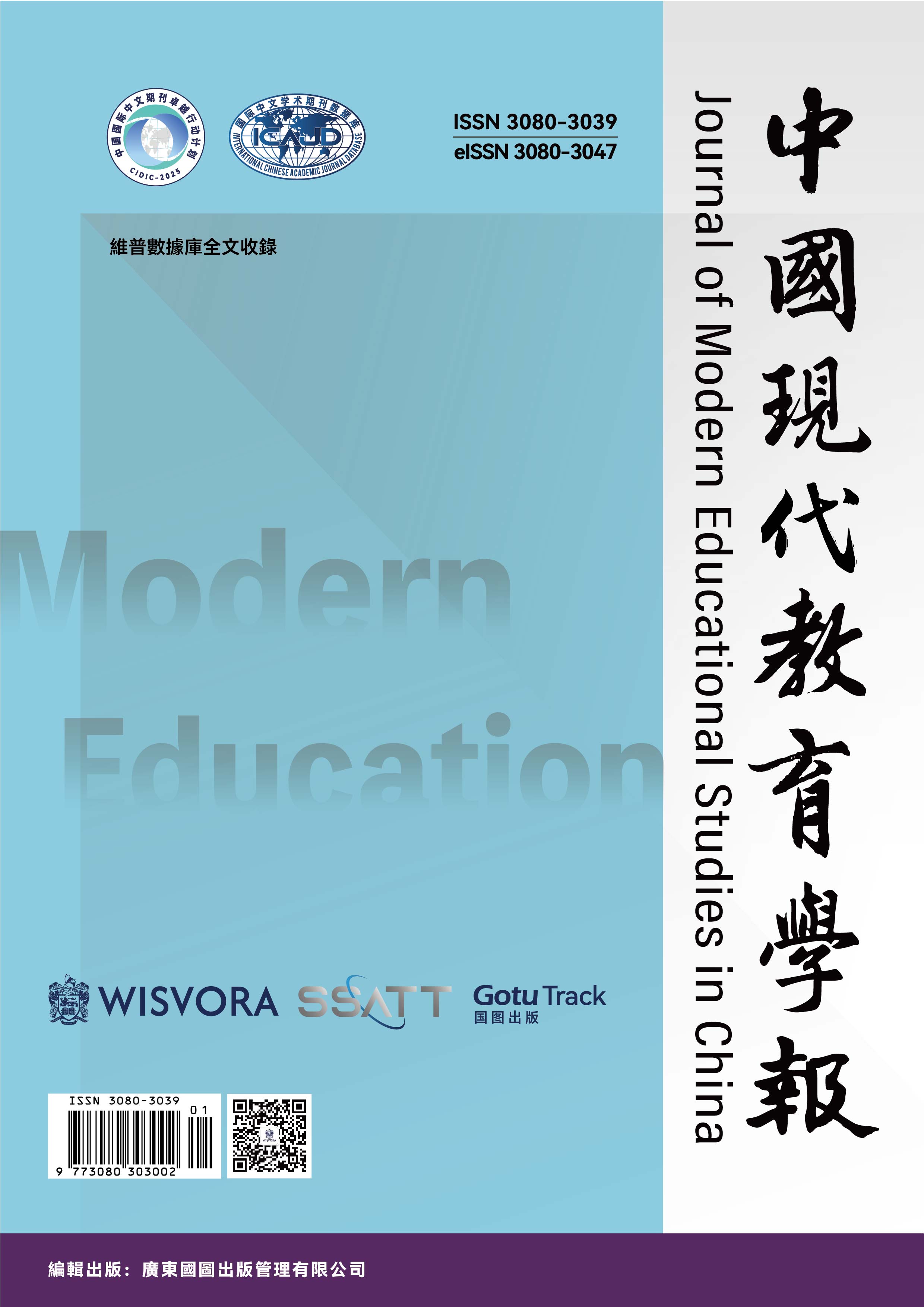
刊期目次
期刊订阅
添加您的邮件地址以接收即将发行期刊数据:
当前位置:中国现代教育学报
>
2026年9-10月-2卷5期
>
文章详情
Open Access
Article

反思性使用还是答案依赖:生成式人工智能对大学生批判性思维的影响机制研究
Reflective Use or Answer Dependence: A Study of How Generative Artificial Intelligence Influences University Students’ Critical Thinking
摘要
生成式人工智能正在重塑大学生的信息检索、文本生产与问题解决过程,但其对批判性思维的影响并非简单的促进或抑制。为揭示不同使用方式的差异化作用,本文拟对高校本科生开展问卷调查,将生成式人工智能使用区分为使用频率、反思性使用、答案依赖和信息核验四个维度,采用多元线性回归进行实证检验。研究重点考察:高频使用是否等同于高质量使用;反思性使用和信息核验能否正向预测批判性思维;答案依赖是否产生负向影响。基于认知工具与认知卸载的双重视角,本文得出,影响大学生批判性思维的关键并非“是否使用AI”,而是学生是否保留先行思考、证据核验、比较质疑和反思修正等认知活动。研究结论将为高校AI素养课程、作业设计和过程性评价提供参考。
关键词
生成式人工智能;大学生;批判性思维;反思性使用;AI依赖
Abstract
Generative artificial intelligence is reshaping how university students retrieve information, produce texts, and solve problems, yet its influence on critical thinking is neither simply positive nor negative. To examine the differentiated effects of various usage patterns, this study conducts a questionnaire survey of university undergraduates. Generative AI use is divided into four dimensions: use frequency, reflective use, answer dependence, and information verification, and multiple linear regression is employed for empirical analysis. The study focuses on whether frequent use is equivalent to high-quality use, whether reflective use and information verification positively predict critical thinking, and whether answer dependence has a negative effect. Drawing on the dual perspectives of cognitive tools and cognitive offloading, this study concludes that the key factor influencing university students’ critical thinking is not whether they use AI, but whether they retain such cognitive activities as prior thinking, evidence verification, comparative questioning, and reflective revision. The findings provide practical implications for AI literacy courses, assignment design, and process-based assessment in higher education.
Keywords
generative artificial intelligence; university students; critical thinking; reflective use; AI dependence
引用本文
张冰,宋霖霈. 反思性使用还是答案依赖:生成式人工智能对大学生批判性思维的影响机制研究[J]. 中国现代教育学报. 2026, 2 (5): 123-128. DOI: 10.70693/202609131660.
APA引用
张冰, 宋霖霈. (2026). 反思性使用还是答案依赖:生成式人工智能对大学生批判性思维的影响机制研究. 中国现代教育学报, 2 (5), 123-128. https://doi.org/10.70693/202609131660
参考文献

 本文依据
知识共享署名 4.0 国际许可协议
授权发布。允许他人在署名原作者及来源的前提下复制、传播和使用本文。
本文依据
知识共享署名 4.0 国际许可协议
授权发布。允许他人在署名原作者及来源的前提下复制、传播和使用本文。
引用本文
国标引用
APA引用


Copyright © 2026 广东国图出版管理有限公司 Wisvora Publishing · 技术支持:广东国图信息技术有限公司
Email:gotu-track@wisvora.com 网址:gotu.wisvora.com
地址:广东省中山市博爱七路25号中山职业技术学院创新楼8层805
本社刊文依据
知识共享署名 4.0 国际许可协议
(CC BY 4.0)授权发布。允许他人在署名原作者及来源的前提下复制、传播和使用本社刊文。
 本出版社期刊出版地为中国香港,是面向全球的开放获取国际学术期刊;文章观点归属于作者,不代表本出版社立场。